One of the technology areas within Dr. Lavian's telecommunications and network communications expert witness practice. Curriculum Vitae (PDF) · Case history · +1 (408) 209-9112
Dr. Tal Lavian, Ph.D. is a computer networking expert witness retained in patent litigation and technology disputes involving computer network systems, protocols, routers, switches, and network architectures.
Computer Networking Expert Witness: Background and Qualifications
Dr. Tal Lavian serves as a computer networking expert witness in patent litigation, PTAB inter partes review (IPR) proceedings, and ITC Section 337 investigations. He holds a Ph.D. from UC Berkeley specializing in network communications and spent nearly 20 years researching, studying, and lecturing at UC Berkeley. As a telecommunications expert witness, he provides technical analysis covering Internet technologies, network protocols, routers, switches, and network devices. He designed software for networking equipment at Nortel Networks and Bay Networks, and developed systems and architectures for managing networks.
His work in computer networking covers the design and implementation of networks, network management tools, and network automation. He holds 120+ patents in networking technologies and has been retained in 90+ cases involving computer network systems.
Dr. Lavian holds a Ph.D. in Computer Science from UC Berkeley and an M.Sc. in Electrical Engineering from Tel Aviv University, and designed network switch software at Nortel Networks and Bay Networks.
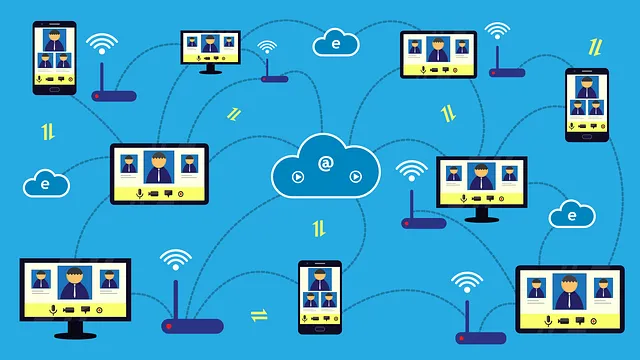
Computer Networks Technology Expert
The following are Dr. Tal Lavian’s domain expertise areas:
- Architects design and build data communication networks
- local area networks (LANs), wide area networks (WANs) like the Internet, extranets, and intranets
- Wired networking: core and edge routers, switches, and load balancers.
- Wireless networking: Access Points, Wireless Controllers, and Data and Control Planes.
- Network Security: Firewalls, VPNs, IPSec, Tunneling, Content Filtering, and Security Gateways.
- Bandwidth throttling, Quality of Service, QoS, Priority queuing, and Traffic Classification.
- Communications protocols: TCP/IP, ARP, DNS, DHCP, GRE, and OSPF.
- LAN and WAN technologies: IEEE 802.1, 802.3, 802.11, 802.15.
- Industry standards: IETF, RFCs, IEEE, and ITU-T.
Background
Dr. Lavian holds a Ph.D. in Computer Science from UC Berkeley, specializing in network communications. He spent nearly 20 years researching, studying, and lecturing at UC Berkeley. He served as Principal Scientist and Principal Architect at Nortel Networks (1996–2007), where he designed network switch software, and as a DARPA Principal Investigator. Dr. Lavian has over 120 patents, over 25 scientific publications, and has been retained in over 90 cases — including 60+ depositions — before U.S. federal courts, PTAB, ITC, and international tribunals. Dr. Lavian's peer-reviewed publications are indexed on Google Scholar. His computer networking case work includes Juniper Networks v. Brixham Solutions (U.S. Patent Nos. 7,535,895 and 7,940,652, involving network device technologies), F5 Networks v. A10 Networks (U.S. Patent Nos. 7,395,349 and 7,102,996, involving network load balancing and switching), and Citrix Systems v. Avi Networks (U.S. Patent Nos. 9,148,493 and 8,631,120, involving network application delivery systems).
Network Protocols and Devices
Computer networking involves using various protocols and devices to transmit and exchange data between computers and other devices. Protocols govern the communication between devices, enabling them to understand and interpret the data they receive. Some examples of commonly used network protocols include TCP/IP, the primary protocol used on the Internet, and IPv6, the latest version of the Internet Protocol (IP).
Network devices, such as routers and switches, connect and manage networks. Routers forward data packets between networks, while switches connect devices within a single network. Network devices can be configured to support various networking protocols and perform various functions, such as routing, switching, and security.
Dr. Lavian has worked with telecommunications network protocols and devices throughout his career, including designing and configuring network architectures at Nortel Networks and in his research at UC Berkeley. He provides technical consulting related to network protocols, devices, and architectures.
Computer networks technologies
Many technologies are used in modern computer networks, including:
- Networking hardware, such as routers, switches, and hubs, provide physical connections and data routing between devices.
- Network protocols, such as TCP/IP, provide the rules and standards for communication between devices on a network.
- Network security technologies, such as firewalls and encryption, protect against unauthorized access and data interception.
- Network management tools, which allow for the monitoring and control of network performance and resources.
- Network automation uses software and algorithms to automate network configuration and management tasks.
These technologies work together to enable efficient and secure data transmission over networks, allowing for the development of complex applications and services, such as e-commerce, social media, and cloud computing. As the Internet continues to evolve, new technologies will be developed to meet the growing demands of users and applications.
Bandwidth Throttling & Quality of Service
Dr. Lavian has expertise in data throttling, bandwidth throttling, traffic shaping, and Quality of Service (QoS) systems that prioritize network traffic. These technologies are central to patent disputes involving internet service providers, enterprise networks, and content delivery systems. His technical background includes Priority Queuing, Weighted Fair Queuing (WFQ), Differentiated Services (DiffServ), and Traffic Classification mechanisms used by ISPs and enterprise network operators.
Software-Defined Networking & Cloud
Dr. Lavian's expertise includes Software-Defined Networking (SDN) architectures, OpenFlow protocol, network function virtualization (NFV), and cloud networking platforms including AWS VPC, Azure Virtual Network, and Google Cloud networking. He has been retained in patent cases involving SDN controllers, virtual network overlays, and programmable network infrastructure.
Network Architecture Design and Implementation Analysis
Dr. Lavian analyzes computer network architecture patents by examining how specific design choices — topology selection, protocol layering, routing policy configuration, and device interconnection methods — map to patent claim elements. His background designing network switch software at Nortel Networks and conducting network architecture research at UC Berkeley provides direct engineering familiarity with the architectural decisions that generate patent disputes. He evaluates both the theoretical principles documented in IEEE and IETF standards and the practical implementation in commercial enterprise and carrier network products including routers, switches, controllers, and network management systems.
TCP/IP Networking and Protocol Stack Expertise
Many computer networking patent disputes turn on how specific TCP/IP protocol behaviors — TCP connection establishment and teardown, congestion control algorithms (e.g., TCP CUBIC, TCP Vegas), packet fragmentation and reassembly, socket-level handling, or HTTP/application-layer integration — implement specific claim elements. Dr. Lavian’s 120+ patents include inventions covering protocol stack implementations across OSI layers, and his doctoral research at UC Berkeley specialized in network communications including TCP/IP. He provides claim construction and infringement analysis grounded in IETF RFC specifications, IEEE 802 standards, and commercial protocol stack implementations as documented in product source records and technical specifications.
Frequently Asked Questions
What computer networks expertise does Dr. Lavian offer for patent cases?
Dr. Lavian offers computer networks consulting in LAN/WAN architecture, Ethernet standards (10GbE, 40GbE, 100GbE), network switching and routing, software-defined networking (SDN), cloud networking, and distributed computer network systems.
What is Dr. Lavian's academic background in computer networks?
Dr. Lavian earned his Ph.D. in Computer Science from UC Berkeley with a specialization in network communications and spent nearly 20 years researching, studying, and lecturing at UC Berkeley.
Has Dr. Lavian testified in computer networks patent cases?
Yes. Dr. Lavian has been retained in 90+ cases, providing expert reports and testimony in matters involving computer networks technologies for companies including Cisco, Juniper Networks, Google, Amazon, Microsoft, and Apple.
What types of computer networks patent disputes does Dr. Lavian handle?
Dr. Lavian handles computer networks patent disputes involving network routers and switches, network interface cards, Ethernet implementations, network protocols, SDN controllers, network virtualization, load balancing, and data center network architectures.
What is Dr. Lavian's professional background in computer networking?
Dr. Lavian designed network switch software at Nortel Networks and Bay Networks, holds 120+ networking patents, and spent nearly 20 years researching, studying, and lecturing at UC Berkeley. He has been retained in 90+ cases involving network technologies.
What courts has Dr. Lavian testified in as a computer networks expert?
Dr. Lavian has provided computer networks testimony in U.S. federal district courts across multiple jurisdictions, the USPTO Patent Trial and Appeal Board (PTAB) in IPR and PGR proceedings, the International Trade Commission (ITC), the Canadian Federal Court, and a court in Malaysia.
What is the role of a computer networking expert in patent litigation?
A computer networking expert analyzes patent claims involving network hardware (routers, switches, NICs), network protocols (Ethernet, TCP/IP, OSPF, BGP), and network architectures (LAN/WAN, SDN, cloud networking). They provide claim construction opinions, infringement analyses, and validity assessments, and testify at depositions, PTAB hearings, and trials.
How does a computer networking expert explain technical concepts to a jury?
A computer networking expert explains networking concepts — such as packet switching, routing algorithms, and protocol handshakes — in terms that judges and juries can follow. Dr. Lavian has nearly 20 years of experience lecturing at UC Berkeley and has presented technical material in 90+ cases across federal courts and PTAB proceedings.